- ripped pants
- when spongebob has to sleep over under patricks rock and patrick beats spongebob like 50 times in his sleep
- krusty krab pizza song/WE USED TO RIDE THESE BABIES FOR MILES
- plankton turns spongebob into a robot and then he rebels
- FIRMLY GRASP IT
- i’m in the kitchen…at night/nosferatu
- “3 cheers for squidward! hip hip! boo.. hip hip! boo.. hip hip.. BOO YOU STINK”
- Krusty Krab training video
- The one where Sandy is into extreme sports and spongebob can’t keep up
- WHEN THEY THINK THEY KILLED THE HEATH INSPECTOR HOLY SHIT
- Sandy hibernates
- Spongebob and patrick try to raise a baby clam
- spongebob and patrik paint the invisible boat mobile BLACK
- onion breath/i’M UGLY..AND I’M PROUD
- when spongebob and patrick pretend to be squiward when he’s trying to sell his house
- When spongebob gets sick and patrick tries to cure him
- WHAT I LEARNED FROM BOATING SCHOOL IS…..
- CHOOOCCOLLATTEEEEE
- Spongebob B.C.
- When they are afraid to go on land but then they go on land and it turns into live action and spongebob is a kitchen sponge
- SEA BEAR/CAMPFIRE SONG SONG
- Magic Conch Shell
- SOILED IT! SOILED IT! SOILED IT! SOILED IT!
- Spongebob tries to get into the Salty Spitoon
- FUUUUUTUUREEEE
- talent show with squidwards interpretive dance
- the dream episode where spongebob is squidwards clarinet and he goes LAAALAAAALALLALALALA ALAAALAAAAA
- Kevin and the queen jellyfish
- Fine dining and breathing
- Flying Dutchman leedle leddle leedle lee
I literally recognised every single one what the fuck I hate myself
Author: toppysammy

More tidbits I’ve found while researching
- tumblr has a sad-boner for the burning of the library of alexandria
- which was not actually one burning but several
- and while the Library of Alexandria was an immense historical and national treasure, a lot of ppl tend to forget about the other book and library burnings that occurred in antiquity
- Places like the library of Nalanda, in India, which contained an elaborate classification system to hold what was then seen as the largest collection of Buddhist literature
- and the House of Wisdom in Baghdad, which contained Greek and Arabic works on mathematics and astronomy to zoology and cartography
- and more recently, the Institut für Sexualwissenschaft (no, that does not mean sexual witchcraft) which was burned by the Nazis b/c the majority of tomes dealt with same sex relationships and gay rights and acceptance.
- and omg, this makes me so mad. The Libraries of Fisheries and Oceans in Canada has all its collection thrown away in an attempt to save taxpayer money and on the hope that all of its material was digitized. Only 5 to 6% was.
- and the Saeh library in Lebanon, which was burnt b/c of terrorism.
- Book burnings are happening right now, y’all.
Not to mention how the Spanish systematically destroyed the entire literary output of whole societies in Mesoamerica, to the point where we only have a handful of their codices today
We should talk, too, about the heroism of those trying to save books from violence, not least because the deliberate destruction of cultural artifacts is evidence of genocide. A few libraries not mentioned above:
- The National Library of Bosnia, located in Sarajevo, which was destroyed in August of 1992 by Serb forces. It was targeted with incendiary shells, and over a million books testifying to Bosnia’s multicultural history were lost in the resulting fire. Aida Buturović, a young librarian, was killed by sniper fire while trying to carry books from the burning building. The Oriental Institute, housing the majority of Sarajevo’s Islamic manuscripts, was destroyed that May, but it wasn’t the first library burnt in Sarajevo: during World War II, the Nazis decimated the collection of La Benevolencija, one of the oldest Jewish organizations in the city.
- The Ahmed Baba Institute in Timbuktu, which was burned in January 2013 by Tuareg rebel forces fleeing the city, who had been using the library as a barracks. The fire destroyed 4,000 manuscripts – but Abdel Kader Haïdara, a librarian, saved 400,000 more from libraries all over the city by smuggling them out in the preceding months. He had help, and the ‘book rustlers’ of Mali – who risked their lives to do it – saved 800 years of West African history.
I’d bet five galleons that George Weasley asked McGonagall out to the Yule Ball on a dare.
I bet that Fred popped up before she could reply and acted betrayed (“YOU KNOW HOW I FEEL, HOW COULD YOU?) and they proceed to have a fake fight over who gets to take her to the ball.
Meanwhile McGonagall is trying to be stern and not laugh because it reminds of when Sirius tried to ask Dumbledore out and had almost the exact same fight with James
Hey let’s destroy the pernicious myth that preteens were regularly marrying in medieval and early modern Europe and were having children as young teenagers. It’s just not true. Church records show the typical age people got married was around 18-23. Sure, around a third of brides were pregnant at the time of their marriage, but premarital sex was actually completely fine in medieval and early modern Europe if the couple intended to marry. (Oh look! Another historical fact the Victorian period completely mangled!)
Very young girls were not having babies in medieval times, people. The only people who ever bring this non-fact up are paedophiles looking to defend their dangerous paraphilia. So cut it out. Stop spreading this myth. It’s not historical, it’s not factual, it’s not true.
By the way the texts in support of these facts are here and here.
“Emerging evidence is eroding the stereotype of medieval child marriage. Goldberg and Smith’s work on low- and lower-middle-status women has refuted Hajnal’s argument for generally early marriage for medieval women. Even Razi’s ‘early’ age at marriage for girls in Halesowen hardly indicates child marriage, as a large portion of his sample married between the ages of eighteen and twenty-two… . Goldberg has offered evidence from fourteenth and fifteenth-century Yorkshire showing that urban girls tended to marry in their early to mid twenties and rural girls married in their late teens to early twenties, and both groups married men who were close to them in age.” (Kim M. Phillips, Medieval Maidens: Young Women and Gender in England, c. 1270-1540, p. 37 (x).
Bolded for emphasis.




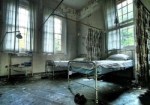

Cane Hill was an psychiatric hospital located in Croydon, London, until 1991 when it closed. The patients were transferred to other hospitals but the hospital itself, and much of the medical equipment, still remains.
now i’m thinking about an au where dean does kill sam in “brother’s keeper,” and sam’s ghost haunts that restaurant forever after
sam can never rest because he can’t be certain his brother is okay wherever death sent him
but sam’s spirit is so strong, and people, all sorts of people who drive by on the highway or live in a 10 mile radius or come because of hearsay, are drawn to that place. they can’t explain what it makes them feel, being there – it’s not a bad feeling exactly, more like heartache or a resigned, steadfast kind of solitude. it makes them want to call up their family members they’ve been estranged from for years or just haven’t talked to in a few hours. it makes them want to talk – to open up – so they do, speaking to nothing but thin air in an empty room, and yet, still feeling comforted
soon people start to leave letters; to whom, they don’t know. they fill that abandoned place with notes and messages on scraps of paper, on the walls in marker or paint, telling their secrets, sharing parts of themselves and leaving unburdened
the ghost that haunts the place is an urban legend. no one can pin down what exactly brought the ghost there, or what caused its demise. it’s all shrouded in mystery but there’s a lot of emotion around there, that’s for sure
a few years later the restaurant makes a list of most haunted locales – not because of anything sinister or terrifying occurring there, but because people just can’t explain the bittersweet aura of the place, or what attracts them there, or why sometimes, they even come back more than once
they say at night you can see someone sitting in the doorway of the restaurant under the awning – a tall man, dressed in plaid, reading all of his letters one by one




 Random Toughts